
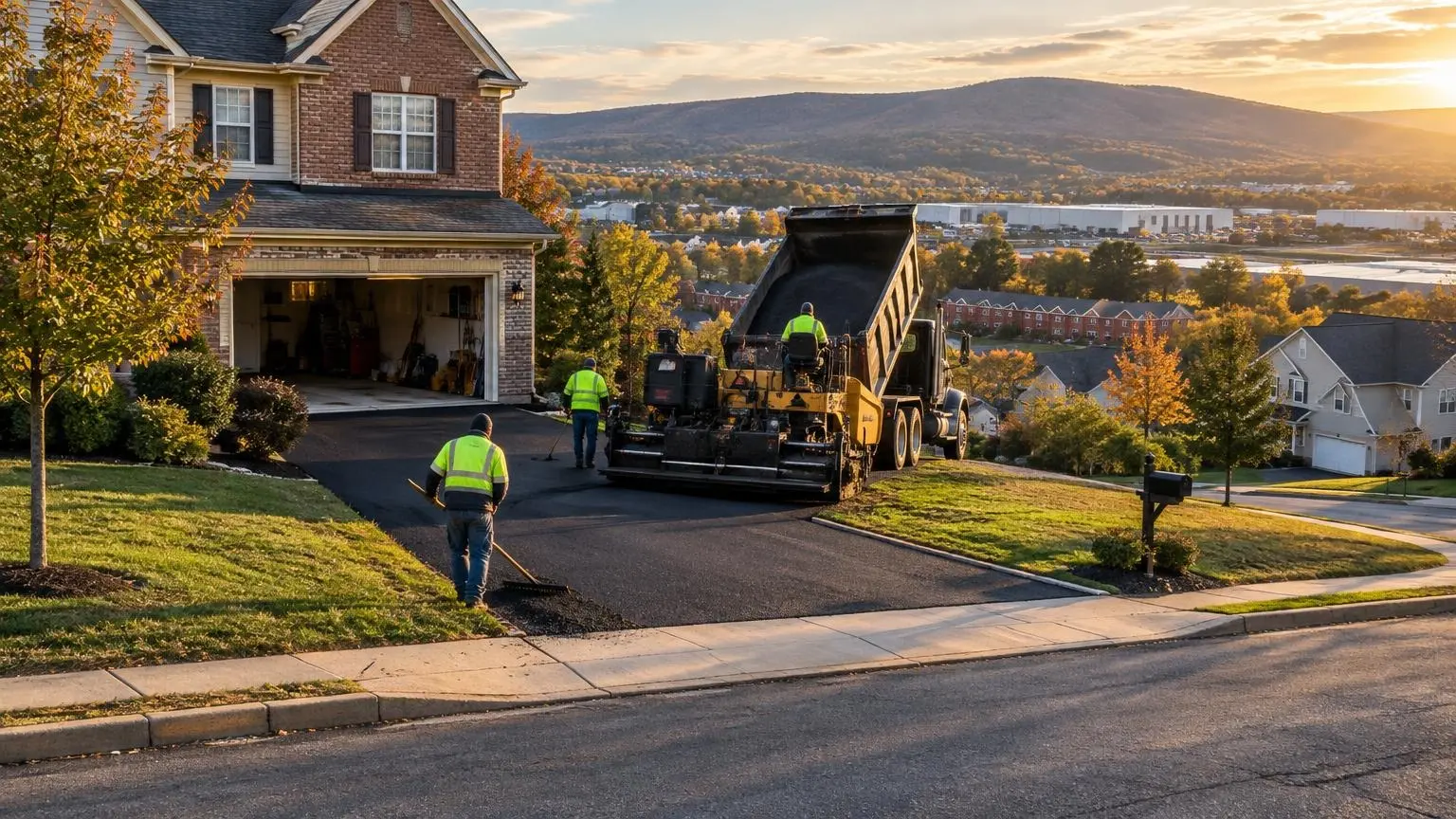
New, replacement and widened driveways
Asphalt Driveways in Allentown, PA
The surface is the last few inches. The work that decides how long it lasts happens underneath.
- Free estimates at your property
- Itemized written quote: base depth, asphalt thickness and edges
- Street and alley permit questions answered before work is scheduled
A Driveway That Gets Through Pennsylvania Winters
Asphalt driveways in the Lehigh Valley fail from the bottom up. When a driveway in Allentown breaks into a web of connected cracks, sinks near the garage or crumbles at the lawn edge, the cause is almost always a thin base, soft soil under it, or water that soaks in and freezes. A new driveway is a chance to fix those causes, not just to lay fresh blacktop over them.
When replacement makes sense
- Cracks that join up into a pattern like alligator skin across large areas
- Potholes that keep returning in the same spots after patching
- Sunken tire tracks or low areas that hold water after rain
- Edges breaking off into the grass
- More patches than original surface
A few isolated cracks can be filled and a small failed spot can be cut out and patched. Once the failure covers much of the driveway, replacing it usually costs less over its life than repeated repairs. If the surface is worn but still solid, an overlay may be enough, and we tell you which one we see.
The build, layer by layer
We remove the old asphalt, concrete or gravel and look at what is underneath. Soft or wet spots are dug out and replaced with crushed stone. The stone base is graded to the slope the finished surface needs and compacted in layers. HomeGuide describes a typical residential section as 6 to 8 inches of compacted gravel under 2 to 3 inches of compacted asphalt, and 8 to 10 inches of base under 3 to 4 inches of asphalt for driveways that carry heavier vehicles. Hot mix is then placed, raked at the edges and rolled while it is still workable.
Water and limestone
Much of the Lehigh Valley sits on limestone. Pennsylvania American Water notes that stormwater soaking through cracked pavement is one of the ways sinkholes start in karst areas. We do not claim to know what is under your lot, but we do make sure the driveway sends water to the lawn, a swale or the street rather than into one corner, and we point out downspouts that dump onto the pavement. If you have seen a depression open up in the yard or driveway before, tell us at the estimate.
Garage, sidewalk and alley transitions
At the garage we taper the asphalt so it meets the slab without a lip that catches snow shovels. At the front, most city driveways meet a concrete curb and sidewalk; in Allentown, curb and sidewalk work needs its own permit, and opening a street or alley surface needs a Public Works permit under Chapter 545. For rowhouse and twin garages off a rear alley, the pad on your property can usually be paved without touching the alley itself, and we plan the joint so water from the alley does not run into the garage.
Gravel to asphalt
Gravel driveways on larger lots in the townships are a common conversion. The existing stone can often be regraded and reused as part of the base after it is cleaned up and topped off, which keeps the cost down. We check the depth and condition of the gravel first, since a thin layer over clay or topsoil will not support asphalt.
Caring for it after
New asphalt stays a bit soft through its first summer. Vary where you park, do not turn the wheels while the car is standing still, and put a board under kickstands and trailer jacks. Wait three to six months before sealcoating, then seal every few years and fill cracks before winter. Use a plastic shovel blade if you can, and avoid piling salty snow on the same edge all winter.
What a Driveway Job Includes
Every driveway quote breaks the work into these parts.
Removal and haul-off
Old asphalt, concrete or gravel taken out and disposed of.
Base repair and grading
Soft soil dug out, crushed stone placed, graded for drainage and compacted.
New hot-mix asphalt
Placed and rolled to the compacted thickness written in your quote.
Widening and conversions
Extra parking width or a gravel driveway converted to asphalt.
Edges and transitions
Clean joints at the garage slab, sidewalk, curb and alley.
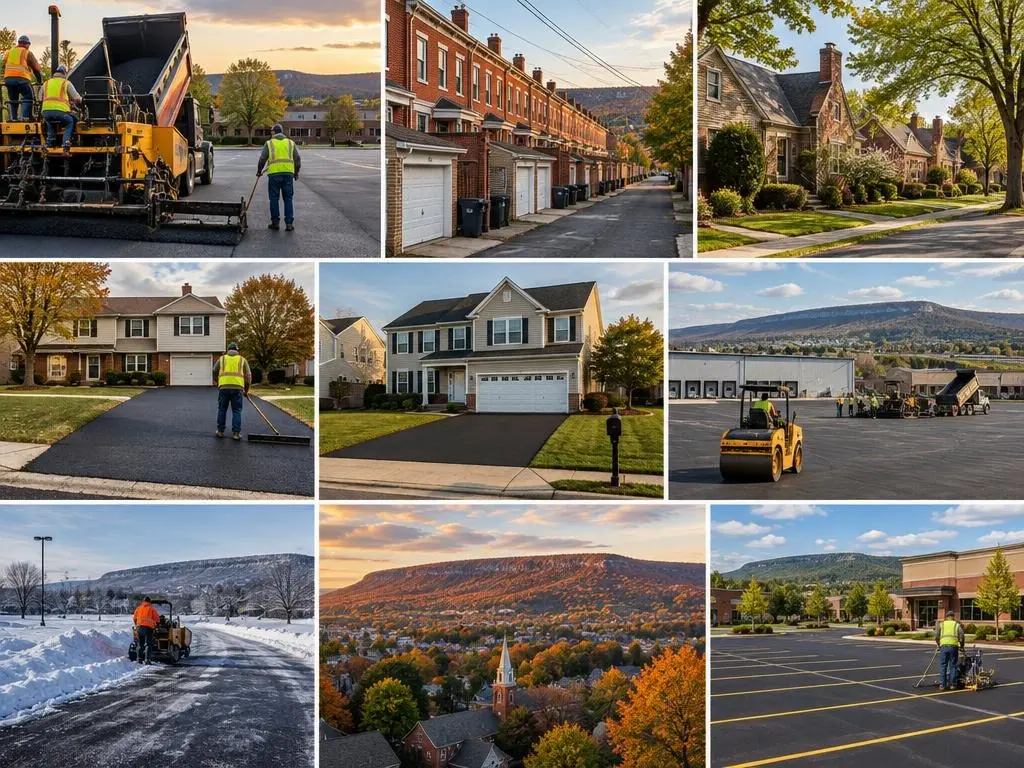
Typical Asphalt Driveway Costs
| Item | Published national range |
|---|---|
| New asphalt driveway (HomeGuide) | $5 to $12+ per sq ft |
| New asphalt driveway (Angi) | $7 to $15 per sq ft |
| 400 sq ft driveway (HomeGuide) | $2,000 to $4,800 |
| 600 sq ft driveway (HomeGuide) | $3,000 to $7,200 |
| 1,000 sq ft driveway (HomeGuide) | $5,000 to $12,000 |
| Remove and replace (Angi) | $8 to $15 per sq ft |
| Driveway permit, where required (Angi) | $50 to $200 |
National ranges from HomeGuide and Angi, which build their figures differently. Some contractors set minimums of $2,000 or more. Removal, base repair, slope and alley or curb work move the total. The number on your signed quote, not a national average, is what you pay.
From Estimate to Finished Surface
1. Site visit
We measure, check slope and drainage, probe soft spots and look at the garage, curb and alley joints.
2. Written quote
Removal, base depth, asphalt thickness and edges are itemized with prices.
3. Base work
Old surface out, soft soil replaced, stone graded and compacted.
4. Paving
Hot asphalt placed and rolled, edges finished, care instructions handed over.
Asphalt Driveways Questions
How much does a new asphalt driveway cost in the Allentown area?
National guides list about $5 to $12 or more per square foot (HomeGuide) and $7 to $15 per square foot (Angi). A 600-square-foot driveway runs about $3,000 to $7,200 in HomeGuide's table. Tear-out, base repair and access change the total, and we price your driveway in writing after seeing it.
How thick should my driveway be?
For cars, 2 to 3 inches of compacted asphalt over 6 to 8 inches of compacted stone is the common residential build. If you park a pickup with a plow, a camper or a work truck on it, go thicker on both layers.
Can you pave a rowhouse parking pad off the alley?
Yes. The pad on your property is ordinary driveway work. If the job would open or change the alley surface itself, Allentown requires a Public Works permit first, and we plan the work so that is either avoided or handled properly.
How long does the work take?
Most residential driveways take one to three days: removal and base work, then paving. Weather can shift the schedule, since we do not pave on wet or cold ground.
Why do some new driveways crack in the first winter?
Usually a thin or poorly compacted base, soft soil left in place, or water collecting at an edge. Those are the parts of the job we spend the most time on.
Asphalt Driveways Service Areas
- Asphalt Paving in Allentown, PA
- Asphalt Paving in Bethlehem, PA
- Asphalt Paving in Easton, PA
- Asphalt Paving in Whitehall Township, PA
- Asphalt Paving in South Whitehall Township, PA
- Asphalt Paving in Salisbury Township, PA
- Asphalt Paving in Emmaus, PA
- Asphalt Paving in Lower Macungie Township, PA
- Asphalt Paving in Upper Macungie Township, PA
- Asphalt Paving in Macungie, PA
- Asphalt Paving in Catasauqua, PA
- Asphalt Paving in Coplay, PA
- Asphalt Paving in Fountain Hill, PA
- Asphalt Paving in Hellertown, PA
- Asphalt Paving in Upper Saucon Township, PA
- Asphalt Paving in Coopersburg, PA
- Asphalt Paving in Northampton, PA
- Asphalt Paving in North Whitehall Township, PA
- Asphalt Paving in Bethlehem Township, PA
- Asphalt Paving in Palmer Township, PA
- Asphalt Paving in Nazareth, PA
- Asphalt Paving in Alburtis, PA
Get a Asphalt Driveways Estimate
Free written estimates for asphalt driveways in Allentown and the Lehigh Valley.